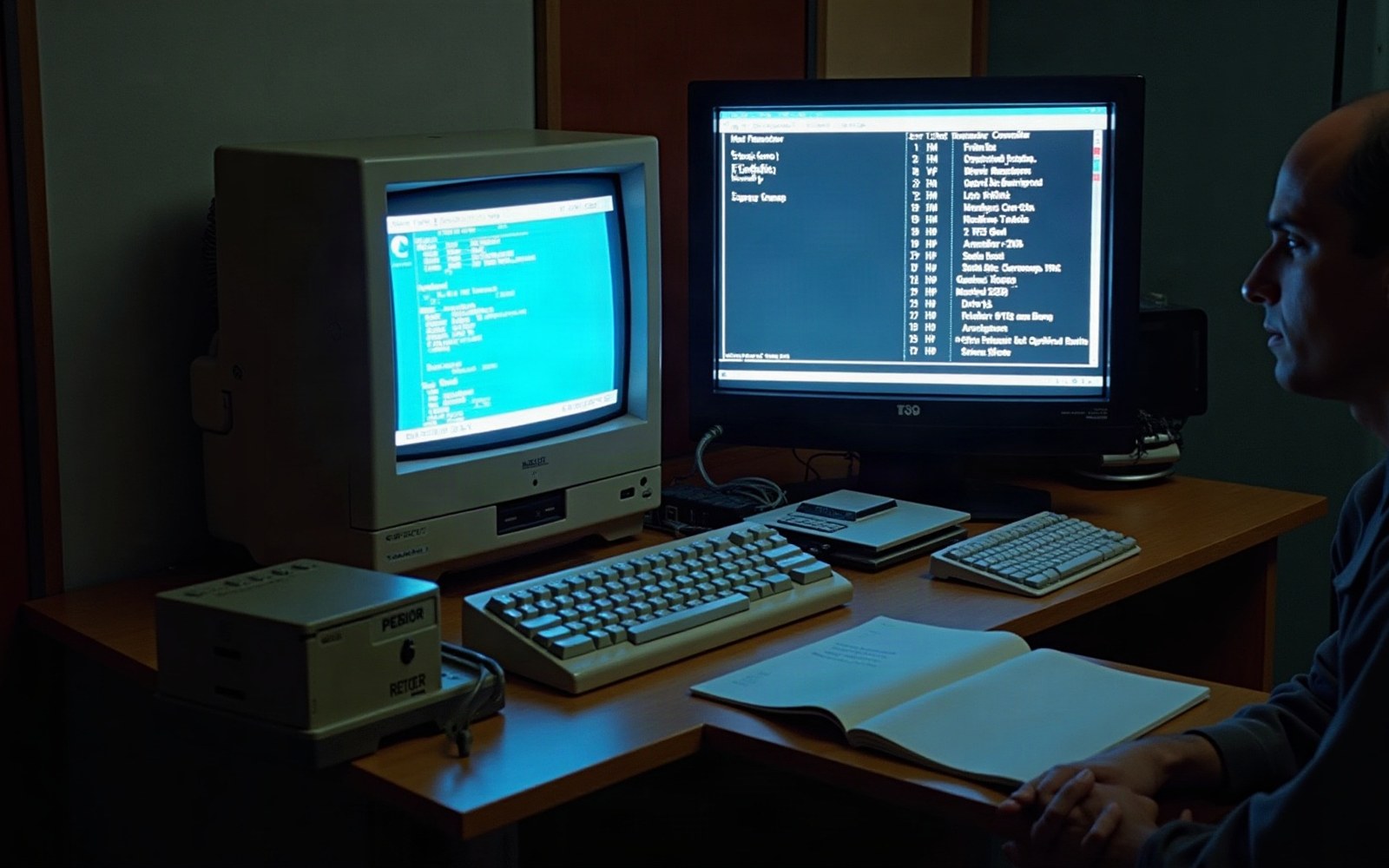
Turbo Pascal had proved the formula by 1987: a fast compiler, an integrated editor, and a price that embarrassed the competition. Borland International, working from Scotts Valley, California, applied exactly that logic to C when it shipped Turbo C in May of that year at $49.95.
The dominant C compilers of the mid-1980s — Lattice C, Microsoft C — sold for several hundred dollars, which put serious C development beyond a hobbyist budget and made corporate site licences a meaningful purchasing decision. Turbo C arrived and made the question irrelevant. The compiler was fast by the standards of the day, fitting core components into conventional DOS memory with the same residency discipline that Anders Hejlsberg had applied to Turbo Pascal. The integrated editor used the same blue-screen environment DOS users already associated with Borland — a consistent, keyboard-driven workspace at a time when consistency across tools was rare.

The IDE itself was modest by later standards: a single-file editor, a menu bar, compiler invocation, and a basic error-navigation loop that jumped the cursor to the offending line. Autocompletion was absent; the debugger arrived more fully formed in Turbo C 2.0, which shipped in 1989 and added a proper integrated debugging session with watch windows and breakpoints without inflating the price past recognition. The complete Turbo C Professional package, which bundled additional libraries and an assembler, still cost less than any mainstream C compiler alone had cost two years earlier.
The cultural consequence was measurable in the DOS programming community. C had been the language of UNIX workstations and well-funded development shops. Turbo C made it available to university students, bedroom programmers, and small-software authors who had previously written entirely in BASIC or Turbo Pascal. A generation of DOS-era shareware and utility software was compiled with it, and Philippe Kahn's pricing instinct — meet the amateur programmer where the money actually is — proved correct a second time. Borland would later consolidate the line into Turbo C++, but the original 1987 release was the moment C ceased to be a professional credential and became simply a language anyone could use.