Room 4 of six
The Inventions
Ideas that had to be named before they could be built — syntax highlighting, the breakpoint, IntelliSense, refactoring, the Language Server Protocol.

-

The Colour Came Later Than You Think
Syntax highlighting is now assumed in any editor, but its adoption in mainstream IDEs was gradual and contested — early terminals could not do it, and some developers actively opposed it. This piece traces the idea from its roots in hardware character attributes through its arrival in Turbo Pascal and into the colour schemes of modern editors.
-
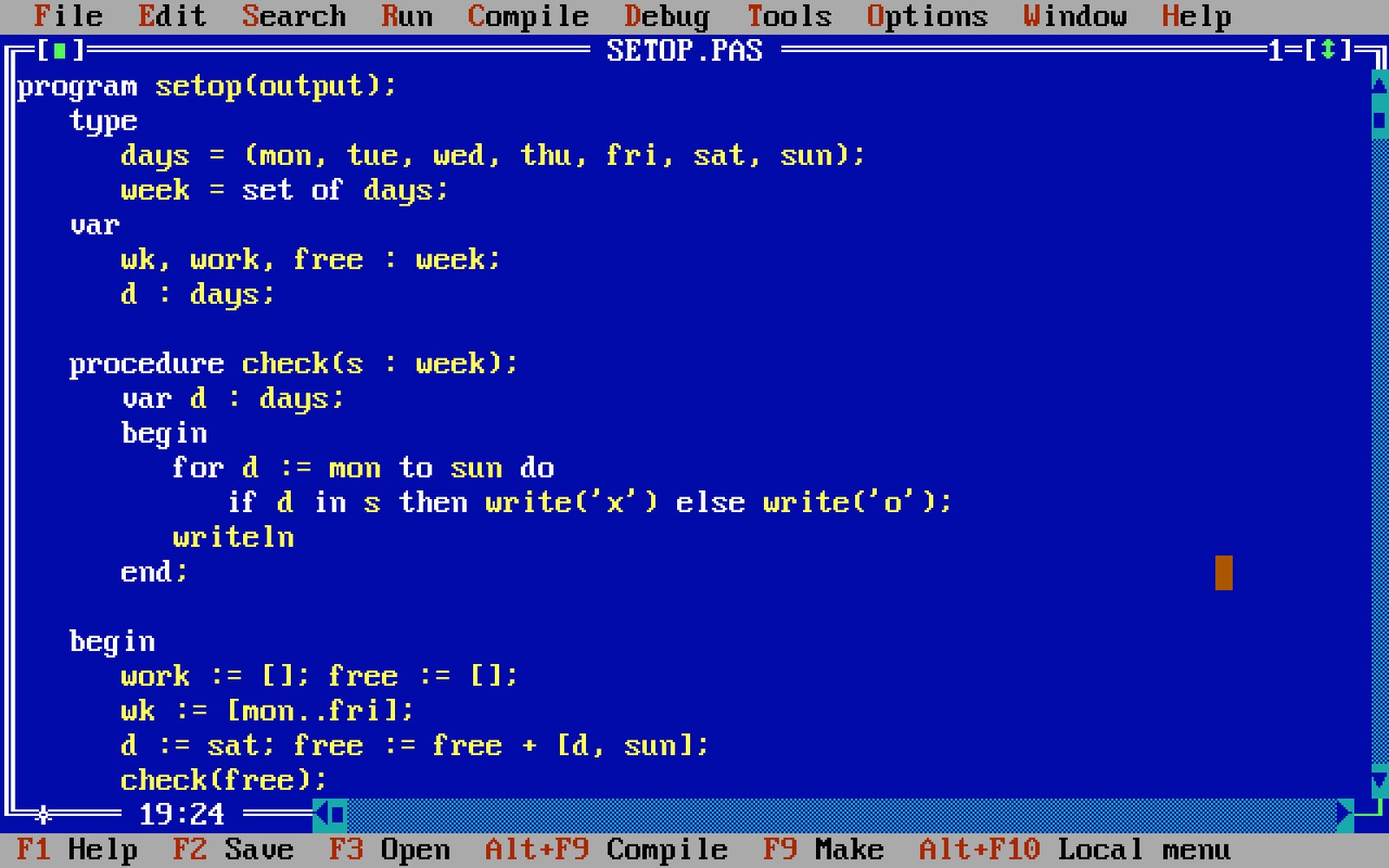
The Program Stopped, and the Guess Ended
The integrated debugger — specifically the breakpoint that halted execution inside the editor — changed what debugging meant for developers who had previously worked from printouts and log files. This piece follows the breakpoint from its early mainframe forms through its arrival in Turbo Pascal 5.0 in 1989 and into the watch window of Visual Studio.
-

IntelliSense, 1996 — the Dropdown That Changed the Argument
Microsoft introduced IntelliSense in Visual Studio 97 (shipped 1996) as a dropdown list of completions drawn from the live type system. This piece examines the feature's original implementation, the engineering behind parsing a partial expression mid-keystroke, and why autocompletion became the capability every subsequent IDE was measured by.
-

Refactoring as a Named Operation
Martin Fowler's 1999 book named refactoring as a catalogue of discrete, safe transformations — and IntelliJ IDEA arrived in 2001 with rename, extract method and move class implemented as first-class menu items. This piece covers Fowler's catalogue, Sergey Dmitriev's argument for tool-assisted refactoring, and what it meant to have the IDE hold the edit rather than the developer.
-
One Protocol, Every Language
Microsoft published the Language Server Protocol in 2016 alongside Visual Studio Code — a JSON-RPC contract that separated language intelligence from the editor, so a single language server could serve any editor that implemented the protocol. This piece examines the problem it solved, the architecture it introduced, and what it changed for tool authors who had previously written editor-specific plugins.
-

When the Diff Moved Inside the Editor
Version control integration — showing a diff, staging a hunk, reading blame inline — moved from the command line into the editor gutter over the course of the 2000s. This piece traces the integration from CVS plugins in Eclipse through the Git adoption that made the editor the primary interface for a commit.
-

The Marketplace Made the Editor a Platform
Eclipse's plugin architecture (2001) established the pattern; the VS Code Marketplace (2015) scaled it to millions of installs and made extensibility the primary argument for choosing an editor. This piece examines the plugin manifest, the extension API surface, and how the marketplace model changed the relationship between an editor and the languages it supports.
The other rooms