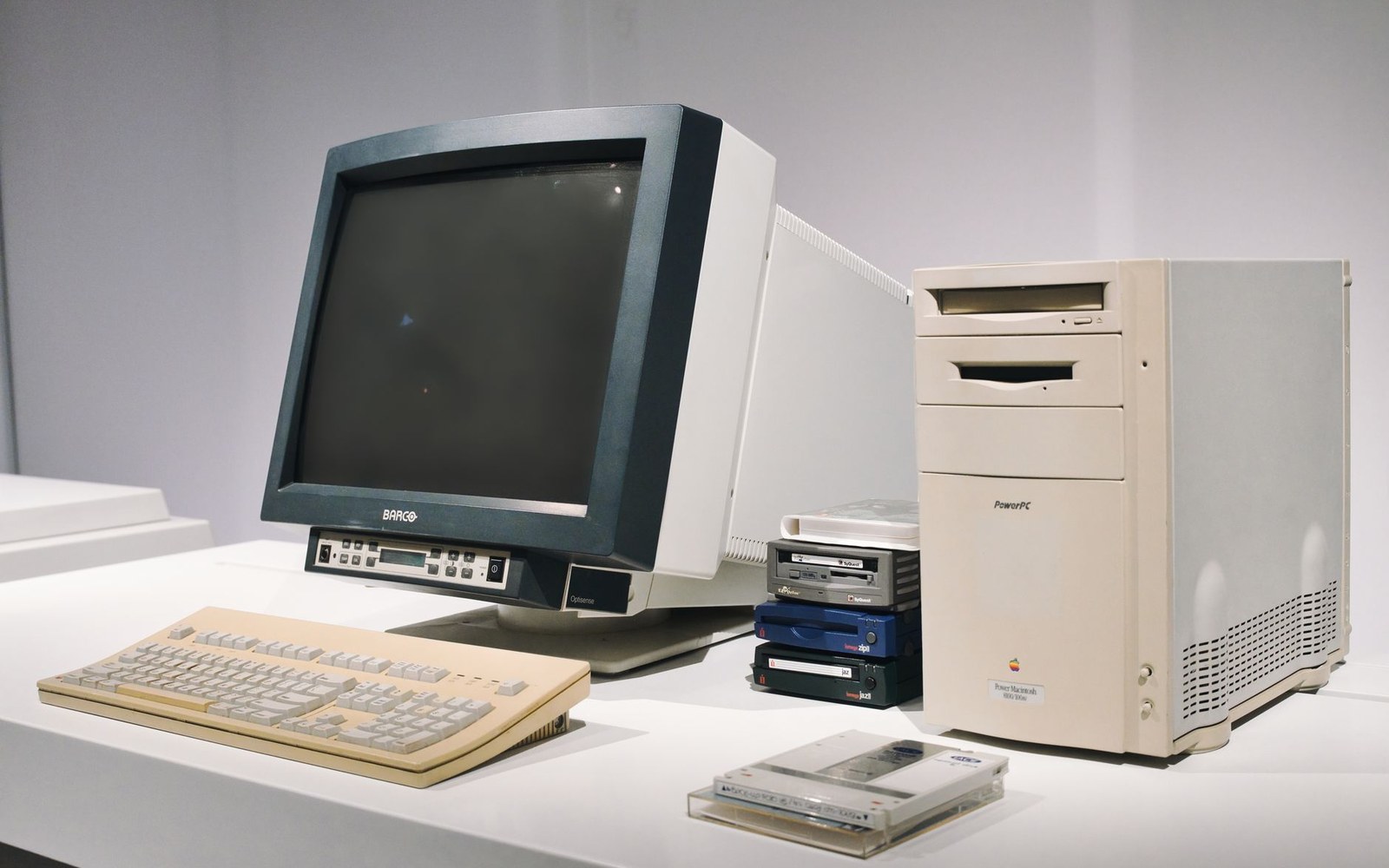
In November 1983, Borland International shipped Turbo Pascal for $49.95. The price was the news that reached most people. The engineering was the thing that made it work.
Anders Hejlsberg, then in his early twenties, wrote the compiler in 8086 assembly language. The goal was absolute: the entire system — editor, compiler, and runtime — had to fit in the RAM a typical IBM PC actually had, and it had to stay there. No disk swap. No overlay loader pulling segments from a floppy mid-compilation. When the developer pressed the compile keystroke, the binary appeared in seconds because nothing had to be fetched first.
The 8086 and 8088 processors imposed a segmented memory architecture in which a single addressable segment could hold at most 64 kilobytes. That constraint was not incidental; it was the walls of the room Hejlsberg was building inside. The entire Turbo Pascal 1.0 package fit in roughly 33 kilobytes of object code, leaving room in a 64 KB segment for source text and the generated program simultaneously. A competing CP/M or MS-DOS Pascal compiler of the period typically ran as a chain of separate executable phases — lexer, parser, code generator — each loaded from disk in sequence. On a machine without a hard drive, that meant audible floppy activity between every phase. A single-pass compiler that lived in RAM produced no such noise and no such wait.
Hejlsberg's compiler was single-pass in the strict sense: it read source code once, top to bottom, and emitted native 8086 machine code directly without constructing an intermediate tree. This was the architectural choice that made the size possible. A tree-building compiler holds the entire program's parsed structure in memory before generating output; a single-pass compiler discards each source unit as soon as code for it has been written. The technique imposed real constraints on the language — forward references required structured workarounds — but Pascal's grammar cooperated. Niklaus Wirth had designed Pascal partly with single-pass compilation in mind, and Turbo Pascal's compiler exploited that affordance completely.
The Loop That Defined the Product
What staying resident produced, beyond raw speed, was a collapsed edit-compile-run loop. On a competing tool the cycle was: exit the editor, invoke the compiler executable, wait through disk access, read error messages from a separate output file, reopen the editor, navigate to the flagged line, correct it, and repeat. Turbo Pascal collapsed that sequence into a single environment. Compilation errors brought the cursor directly to the offending line inside the editor. The developer never left the blue-bordered screen that gave the product its characteristic look.
The speed numbers were striking enough to become a marketing argument in their own right. Borland's documentation cited compilation rates in the tens of thousands of lines per minute on a stock IBM PC. Because the compiler never touched the disk during compilation, the figure was largely independent of drive speed — it was bounded by CPU and memory bandwidth, not mechanical latency.
This compression of the development cycle was the practical argument for what would later be called the integrated development environment. The editor, the compiler, and the error reporter were not separate programs that happened to coexist; they shared state. The compiler knew where in the editor's buffer each line lived. The editor knew how to hand control back to the compiler. That shared-state design was the technical definition of integration, and it arrived in a 33-kilobyte assembly-language binary sold at a price calibrated to impulse purchase.
Philippe Kahn's pricing decision and Hejlsberg's engineering decision were, in this sense, the same decision expressed in two different domains. The tool had to be small enough to ship on a single floppy, fast enough to feel instantaneous, and cheap enough that a student could own it. All three constraints pointed to the same architecture: resident, single-pass, no phases, no swapping. The blue box that appeared on the screen when Turbo Pascal loaded was the visual surface of a very careful piece of systems engineering that happened to change what developers expected from their tools.