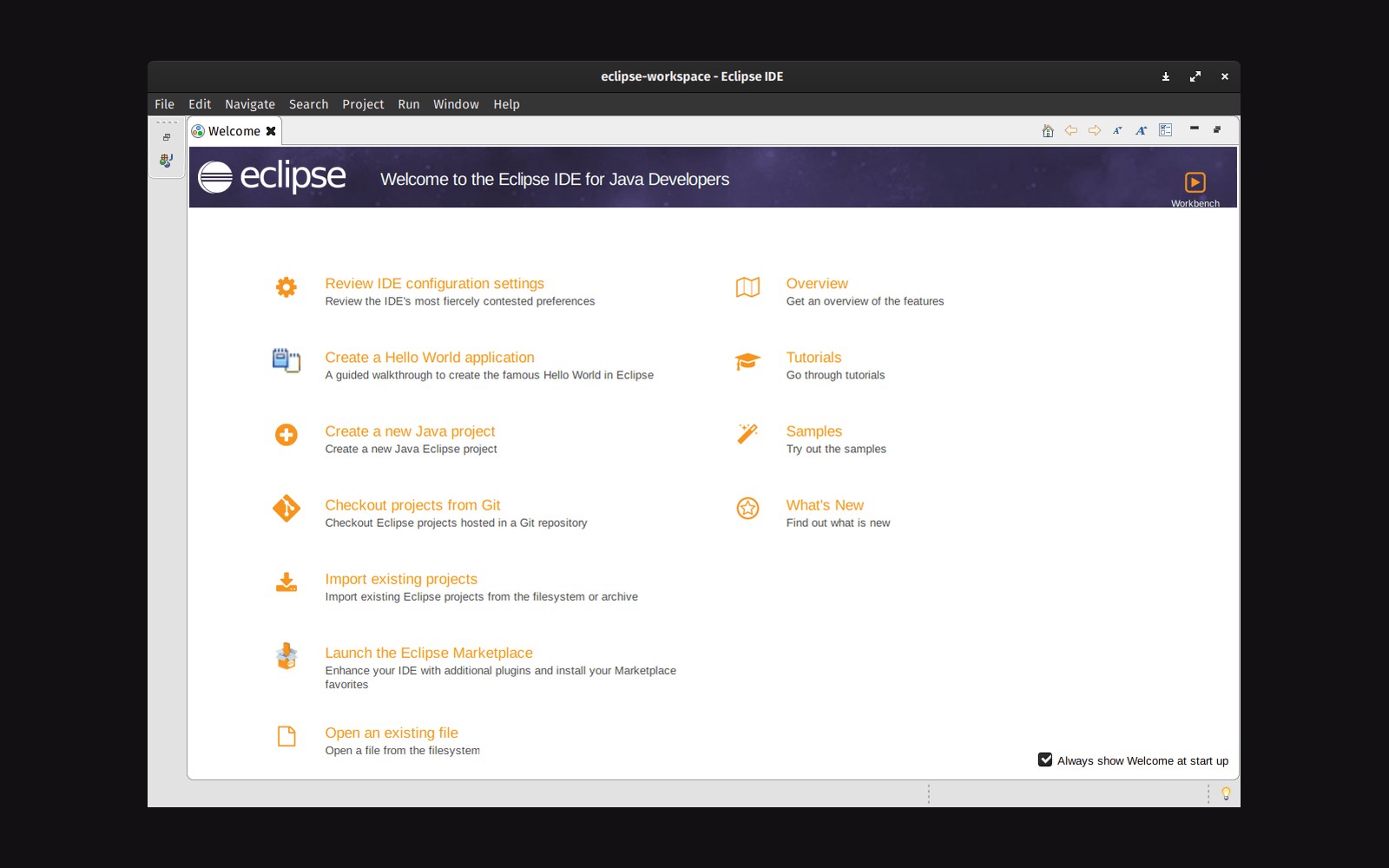
A Platform Disguised as an Editor
IBM had acquired Object Technology International, the Ottawa, Ontario company whose developers had built the core of what became Eclipse. Rather than selling the resulting tool, IBM released it under the Common Public Licence and handed the source to the world. The reasoning was not philanthropy. IBM's commercial interest lay in WebSphere, Rational and a constellation of developer tools that could sit on top of a shared platform — and a free, open platform was harder for competitors to ignore than a proprietary one. If Eclipse became the standard IDE substrate, IBM's commercial layer rode that wave at no extra cost.
The release landed in a market already watching Microsoft's Visual Studio accumulate users with each version's expanding toolset. Eclipse's counter-argument was architectural: rather than a single product, it offered a plug-in framework that let any vendor or open-source team contribute language support, debuggers, build tools or entire development workflows. The extension mechanism was not grafted on after the fact — it was the core design decision.
The Foundation and the Perspective
In 2004, IBM went further and donated Eclipse to the newly formed Eclipse Foundation, an independent not-for-profit whose membership would include Borland International, QNX, Red Hat and a widening roster of commercial and open-source organisations. The Foundation took custody of the codebase, the governance process and the release train, removing the perception that Eclipse was an IBM project with an open-source badge on it. Vendor neutrality was the point: a tool governed by a consortium of competing companies was one that any of them could safely build on, because no single interest could steer it against the others.
The architecture that made this possible centred on what Eclipse called a perspective — a named arrangement of panes and views suited to a particular task. A Java development perspective kept the package explorer, editor and console in one layout; a debug perspective rearranged the same underlying views to foreground the call stack and variable inspector. Perspectives were not cosmetic preferences. They were the mechanism by which Eclipse could host radically different workflows — embedded C development, UML modelling, database administration — without each discipline fighting for screen space or codebase ownership. Each toolset lived in its own plug-in bundle, surfaced through its own perspective, and coexisted without structural conflict.
Erich Gamma, already known for co-authoring the influential Design Patterns book as one of the Gang of Four, led the IBM team that built Eclipse's Java development tools. The plug-in architecture he and his colleagues developed drew on the same discipline that had made those patterns influential: define clean interfaces, hide implementation, let behaviour vary through composition rather than inheritance. The result was a framework that felt coherent even as its plugin ecosystem grew into hundreds of contributed components.
Why Open Sourcing Was the Commercial Argument
The forty-million-dollar acquisition made sense only if Eclipse propagated. An IDE kept behind a paywall might earn licensing revenue; an IDE adopted as the universal Java development platform would establish IBM's tooling vocabulary — the project model, the build integration, the debug protocol — as defaults that commercial products would conform to. Every Rational plug-in that ran inside Eclipse was effectively pre-sold to every Eclipse user. The Foundation's governance model reinforced this by making IBM a member like any other, which neutralised the argument that Eclipse was an IBM lock-in dressed as open source.
By the mid-2000s Eclipse had become the dominant Java IDE by usage, and its plugin ecosystem had expanded well beyond Java to cover C, C++, PHP, and the early experiments in domain-specific language tooling. The Language Server Protocol that Microsoft would later publish in 2016 owed an intellectual debt to the problem Eclipse had already identified: language intelligence should not be coupled to a single editor's internals. Eclipse solved it with plug-ins and extension points; the later protocol solved it with JSON-RPC over a process boundary. The problem statement was the same.
IBM gave Eclipse away because giving it away was how it won.