The Editor and the Licence
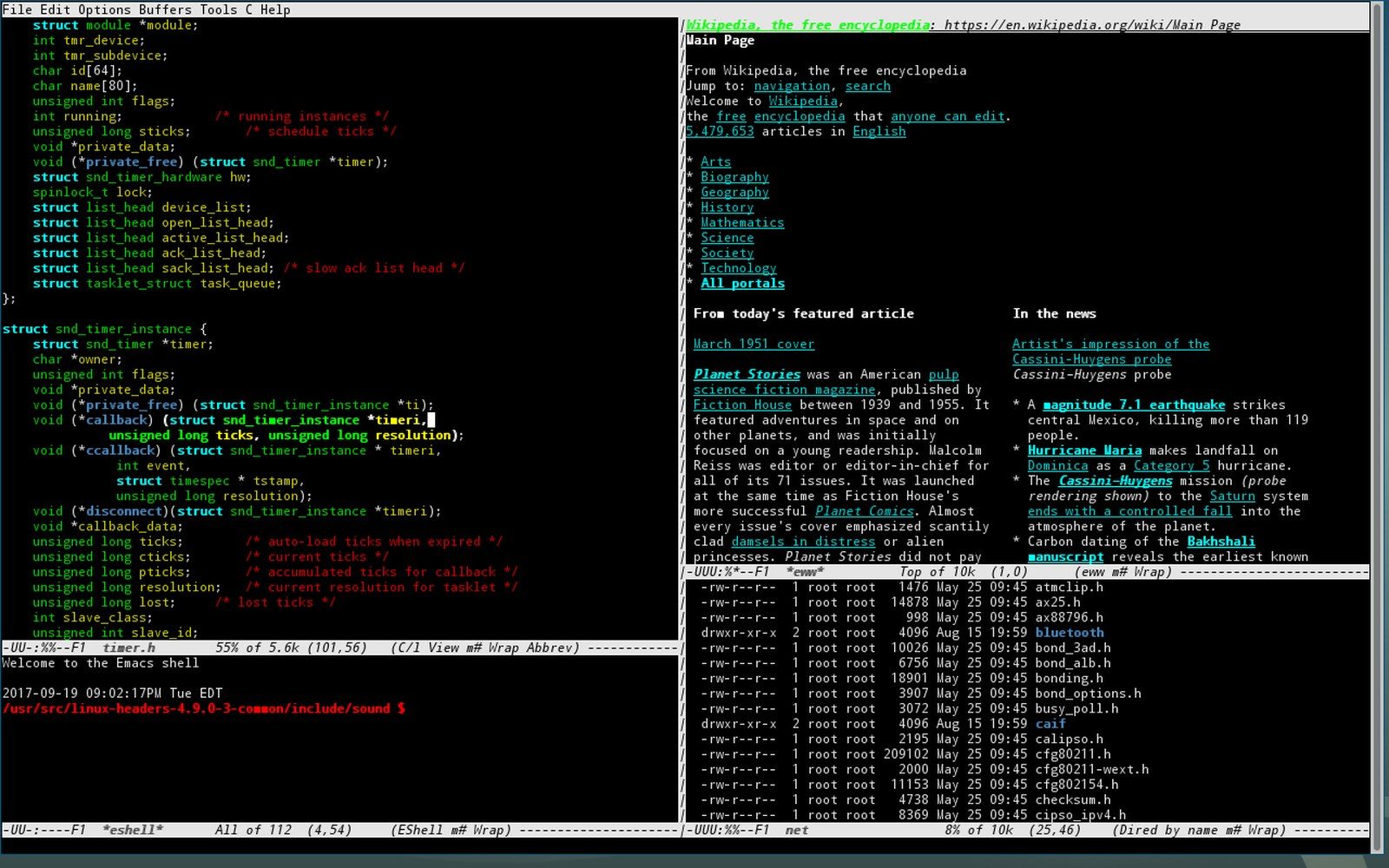
Richard Stallman had been editing code in Emacs for years before GNU Emacs existed. The original Emacs, developed at MIT in the mid-1970s, was a set of macros layered over the TECO text editor — collaborative, widely shared, and adapted freely among the hacker community at the AI Lab. When that culture of sharing began to erode as commercial software licensing tightened in the early 1980s, Stallman drew a clean conclusion: the sharing had to be made legally mandatory, not merely customary.
GNU Emacs 1.0, released in 1985, was the first substantial piece of software issued under the Emacs General Public License, the forerunner of the GNU General Public Licence. The GPL required that anyone who distributed the software — or any derivative of it — must distribute the source code under the same terms. The licence did not prohibit commercial use; it prohibited proprietarisation. Stallman named this mechanism "copyleft," a deliberate inversion of copyright, using the same legal instrument to guarantee openness rather than restrict it.

The editor itself was formidable on its own terms. Written primarily in C with a large runtime layer in its own Lisp dialect — Emacs Lisp — it was extensible in a way no mainstream editor had been. Every keystroke binding, every editing behaviour, every display convention could be redefined in Lisp without touching the core. This was not merely a configuration system; it was a programmable environment in the tradition of the Lisp machines at MIT and the Smalltalk-80 environment at Xerox PARC, where the boundary between tool and program had always been porous.
The Free Software Foundation and What Followed
Stallman founded the Free Software Foundation in 1985, the same year GNU Emacs shipped. The FSF's role was institutional: to hold the copyright on GNU software, to fund development, and to enforce the GPL when distributors violated it. The founding documents defined "free software" across four freedoms — to run, to study, to redistribute, and to modify and share modifications — framing software freedom as an ethical position rather than a commercial preference.
For development tools specifically, the consequences were long-running. The GPL governed not only Emacs but the GNU Compiler Collection, the GNU Debugger, and the entire GNU toolchain that became the substrate on which Linux-based development environments were built across the 1990s. When James Gosling and colleagues at Sun Microsystems developed Java and its associated tools, licensing terms were a live concern from the start, precisely because the GPL model had established that licensing was a design decision, not an afterthought. When IBM released Eclipse in 2001 under the Common Public Licence — deliberately not the GPL, to allow commercial plugin vendors to participate without copyleft obligations — the choice was made in full awareness of what the GPL required and what it foreclosed.
JetBrains, founded by Sergey Dmitriev and colleagues in Prague, built IntelliJ IDEA as proprietary software and charged for it. That was a coherent position because the GPL did not mandate that all software be free, only that GPL-licensed software remain so. The commercial IDE market and the free-software toolchain market developed in parallel throughout the 2000s, each shaped by the licence categories Stallman had defined fifteen years earlier.
What the Argument Settled and What It Did Not
GNU Emacs remains in active development and is, by any measure, one of the longest-lived pieces of software in continuous use. The GPL it introduced has gone through three major versions; GPLv3, published in 2007, added provisions addressing hardware restrictions and patent licensing that the original text had not anticipated. The core mechanism — source availability as a condition of distribution — survived every revision intact.
What the argument never fully settled was whether copyleft was the right instrument for an ecosystem as large and varied as software development had become by the 2010s. Permissive licences — MIT, Apache, BSD — allowed reuse without the requirement to share back, and much of the tooling underlying modern IDEs, including the Language Server Protocol's reference implementations and the infrastructure behind Visual Studio Code, travelled under those terms instead. The debate Stallman opened in 1985 with an editor and a licence document is, in that specific sense, still running.